Across Nigeria, millions of children attend public primary and secondary schools without acquiring basic literacy skills such as reading and writing. Classrooms are usually overcrowded and educators tend to work with limited resources. This means that many learners, each with different abilities and learning needs, are left behind.
This challenge is especially urgent in a country where over 10.5 million children are out of school, according to UNICEF. As teachers are the primary agents of learning in schools, addressing this crisis requires more than access to classrooms, it requires teachers equipped with inclusive, adaptive, and future-focused teaching skills.
Our Response
Capacity Strengthening for Changemakers was designed to equip educators with the tools, mindset, and methods needed to transform learning in public schools.
Implemented by Teach the Child, with funding from Crossing Borders and CISU, the project combined international learning exchange, localised teacher training, advocacy, and organisational capacity building.
Building Strong Foundations: Learning Across Borders
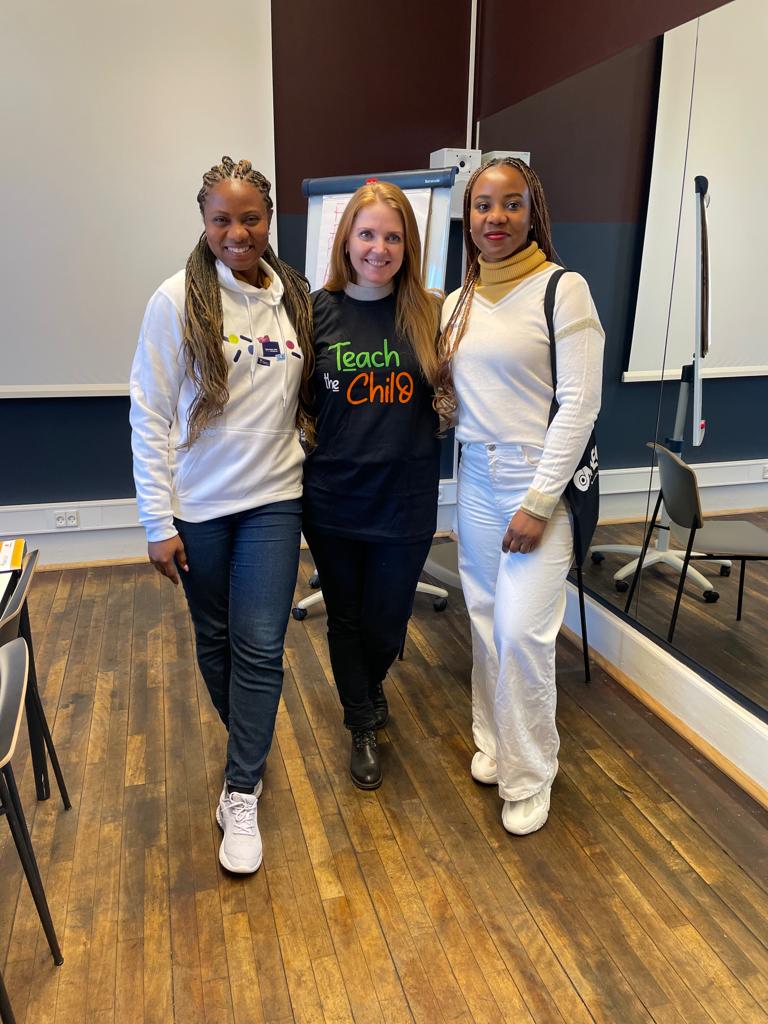
Teach the Child leaders, Pearl Utuk and Blessing Onwudiwe, in Copenhagen, Denmark
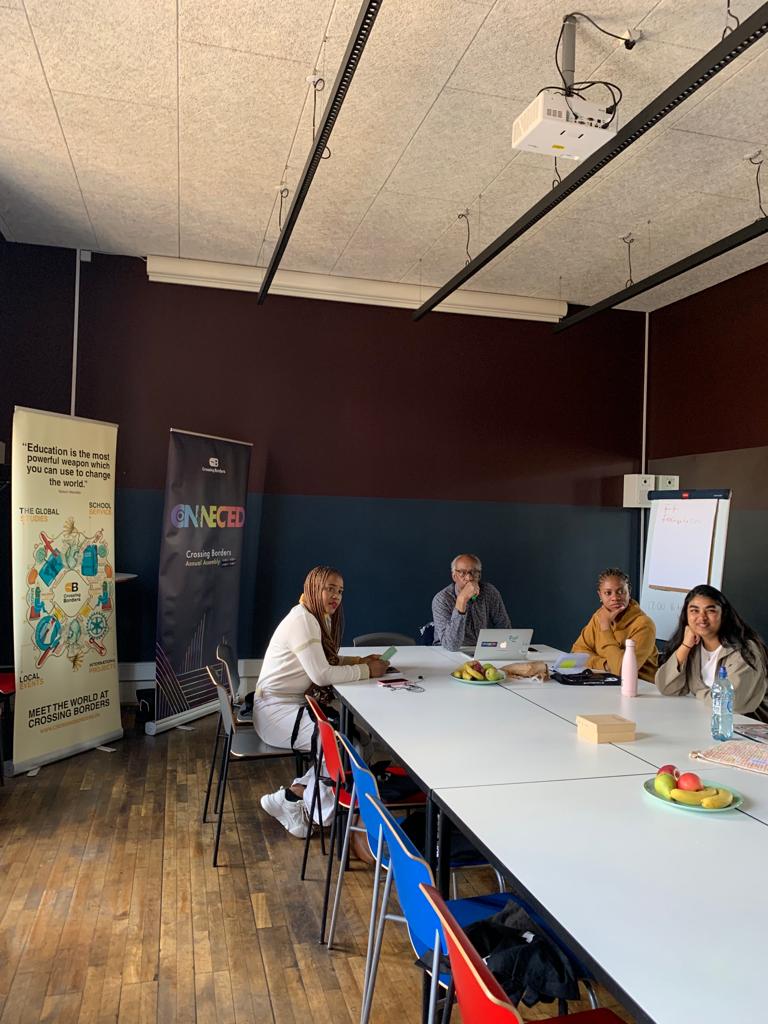
The project began in Copenhagen, Denmark, where our leadership team engaged in intensive accountability and strategy sessions in Copenhagen, analyzing internal structures and observing global best practices at Oehlenschlægersgades Skole.
This provided us with exposure to inclusive education practices and insights that directly shaped the design and delivery of the Nigeria-based intervention.
The Intervention: Empowering Teachers on the Frontlines
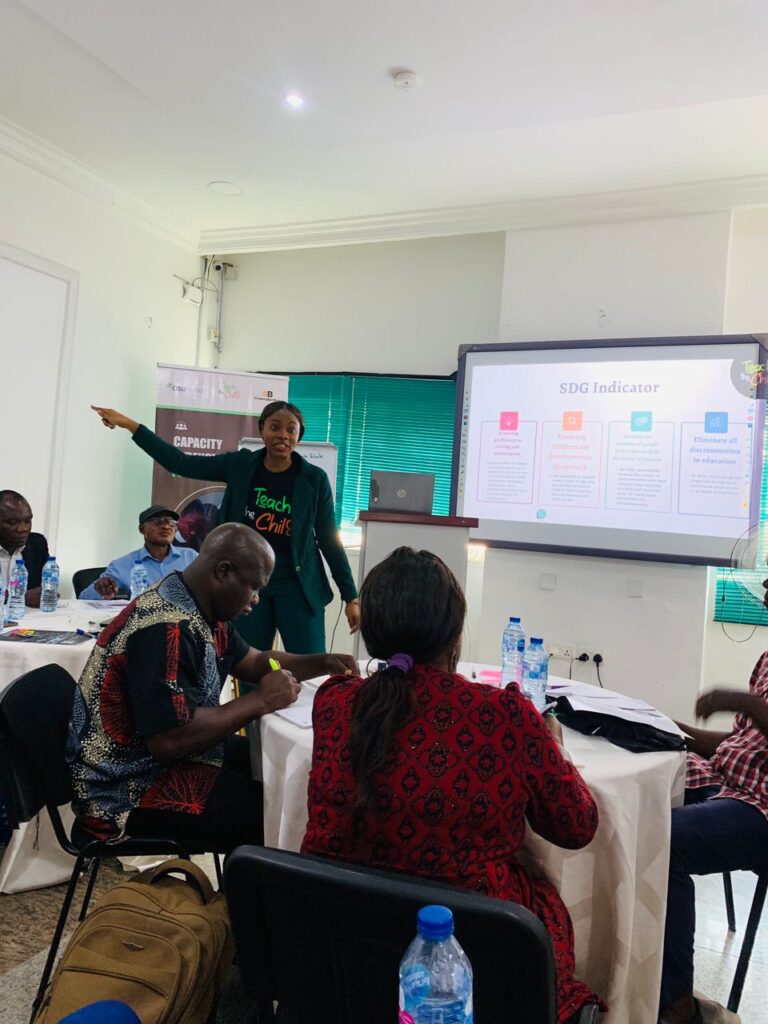
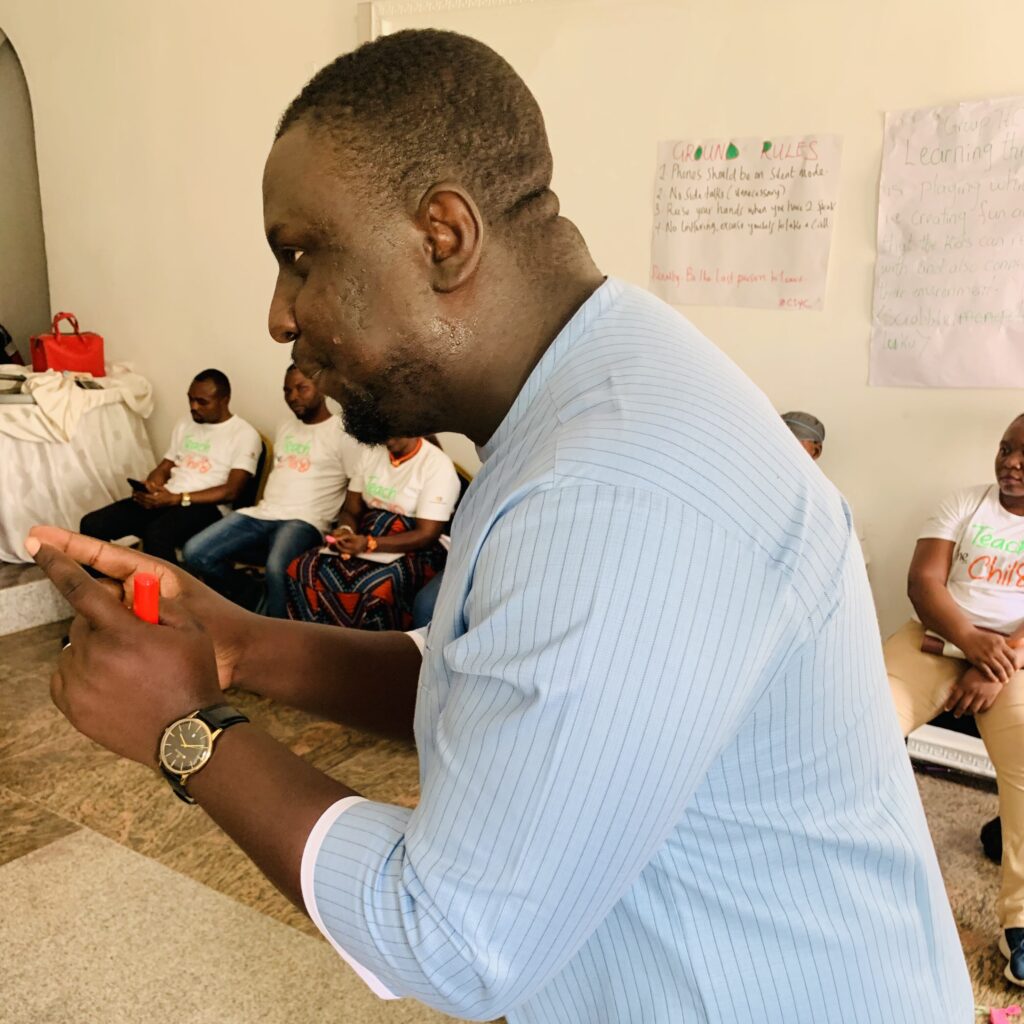
CEO Pearl Utuk, taking participants through SDG 4: formal and nonformal methods
The core of the project was a 3-day, hands-on training workshop in Abuja, bringing together 20 educators from three public primary and secondary schools in the Bwari Area Council.
We designed the workshop to address both pedagogical skills and classroom realities faced by public school teachers. Over the 3 days, sessions were facilitated by education practitioners and experts that focused on:
Early Grade Reading
21st Century Teaching Skills
Teaching at the Right Level (TaRL)
Learning Through Play
Solving Literacy Gaps using Talking Books and Pens
Child Protection and Safeguarding
Localising SDG 4 through Formal and Non-Formal Education Methods
We used a participatory approach, with teachers actively engaging in role-plays, group work, and co-creation of teaching strategies.
Teaching for the 21st Century
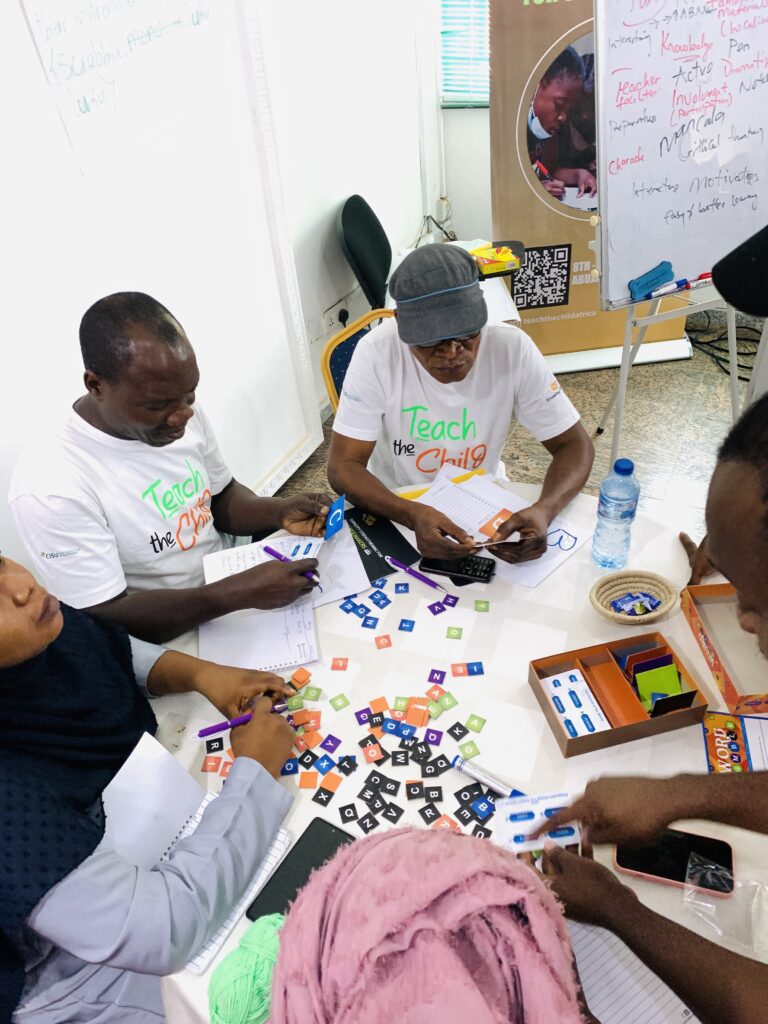
Educators learning how to use games to improve classroom engagement
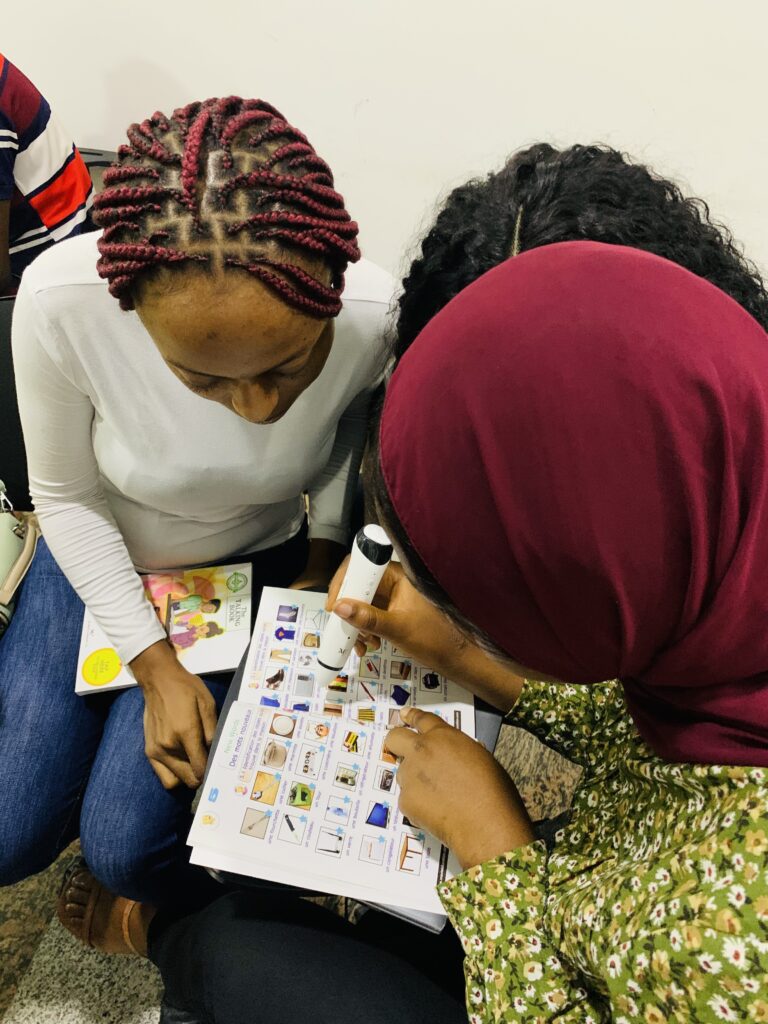
Educators use the Mavis Talking Books and Pens
Teachers were introduced to flexible teaching models that respond to learners’ actual abilities rather than rigid curricula.
Through Teaching at the Right Level (TaRL), educators learned how to group learners by skill level, adapt activities to children’s needs, and ensure foundational literacy before progressing to more complex concepts. The leadership team of Mavis Computel, Chiemezie and Chinasa Ucheaga, also elaborated on how to use Mavis Talking Books and Pens to meet language barrier needs.
During Learning Through Play, Kenechukwu Ogbuagu, the founder of NIBCARD Games, showed how games, classroom layout, rewards, and storytelling can dramatically improve engagement and retention. Educators also developed practical, low-cost teaching tools using locally available materials to adapt their resourcefulness, given teacher budget realities in public schools.
Early Grade Reading sessions anchored by Ojone Aduku, a Montessori school principal, focused on phonics, sound recognition, and structured reading instruction, challenging the assumption that children “just pick up” reading without explicit teaching.
Safeguarding Children
Barnabas Usman takes participants on how to create safe spaces for kids to learn
Recognising that quality education must be safe education, we placed strong emphasis on child protection and safeguarding.
Teachers explored the different forms of abuse children face and examined the uncomfortable reality that abuse often comes from trusted individuals rather than strangers. Through role-play and discussion, educators reflected on their responsibility to protect children and create safe learning environments.
Strengthening the Changemakers Behind the Work
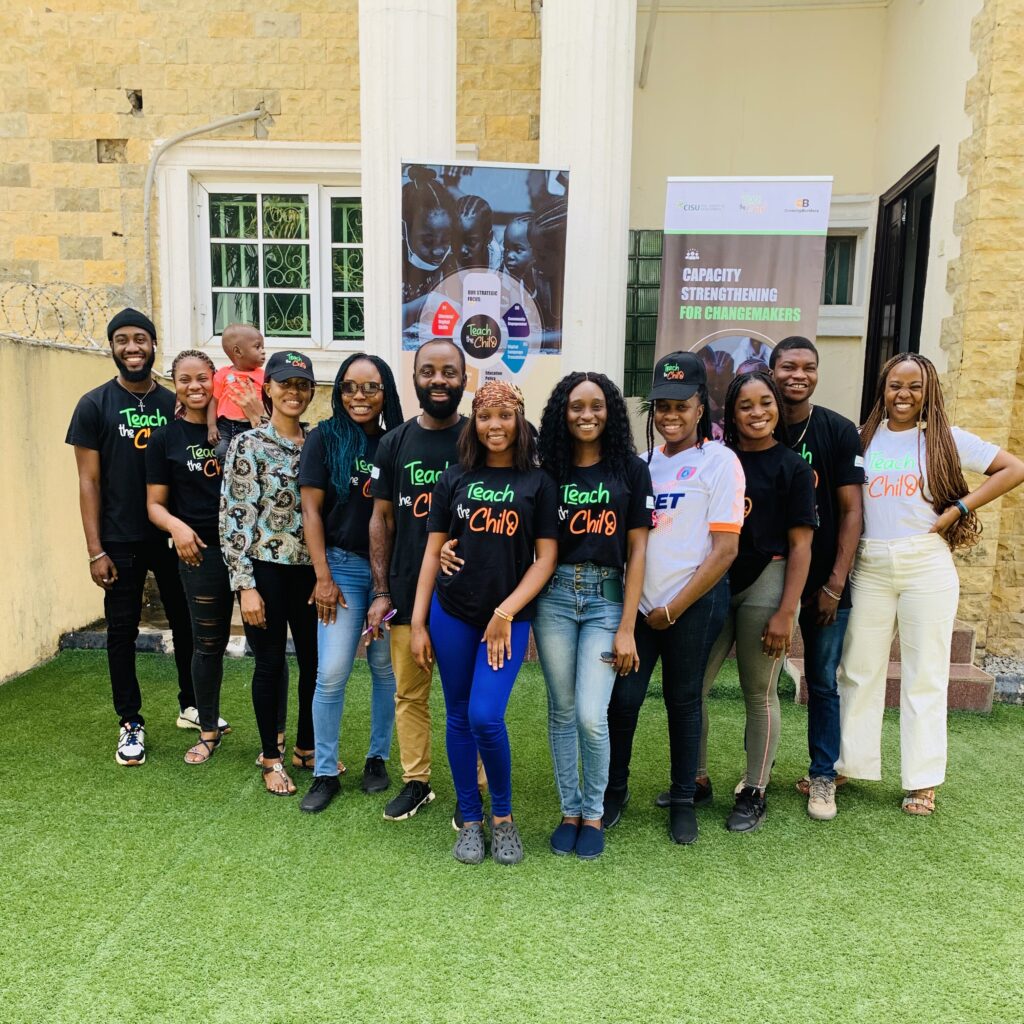
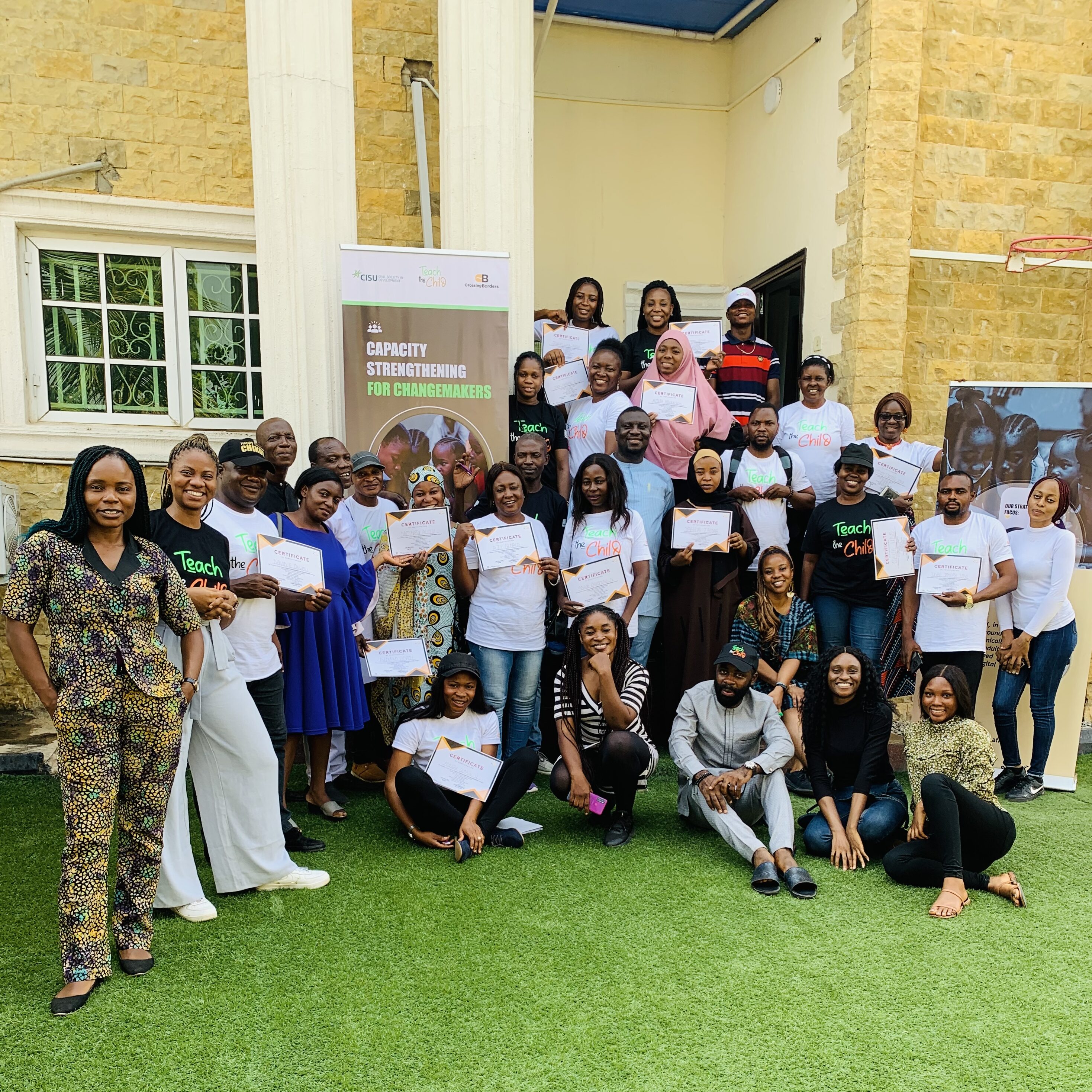
Team Teach the Child at Capacity Strengthening For Changemakers
To ensure long-term sustainability, we extended the project with an additional day of capacity strengthening for our own team, engaging 13 staff members.
These sessions focused on:
Strategic Community Engagement
Strategic Communication for Social Change
Storytelling for Long-Term Impact
Stakeholder Mobilisation
Facilitated by Seun Durojaiye, a leader in solutions journalism and Busayo Morakinyo, a community engagement expert, the sessions strengthened the team’s ability to advocate effectively, engage communities, and amplify impact beyond the classroom.
Impact at a Glance
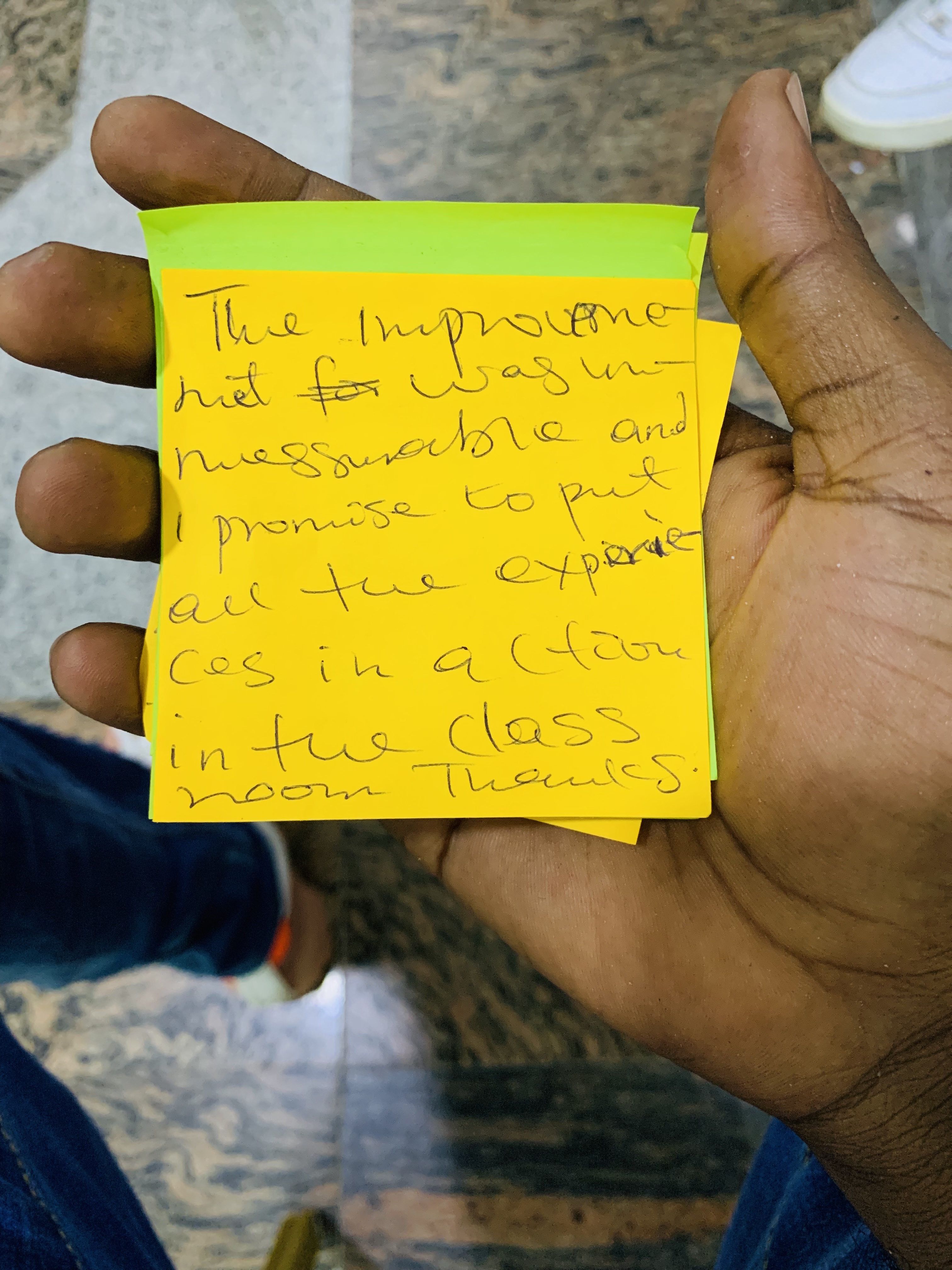
Educator's feedback: "The improvement was immeasurable."
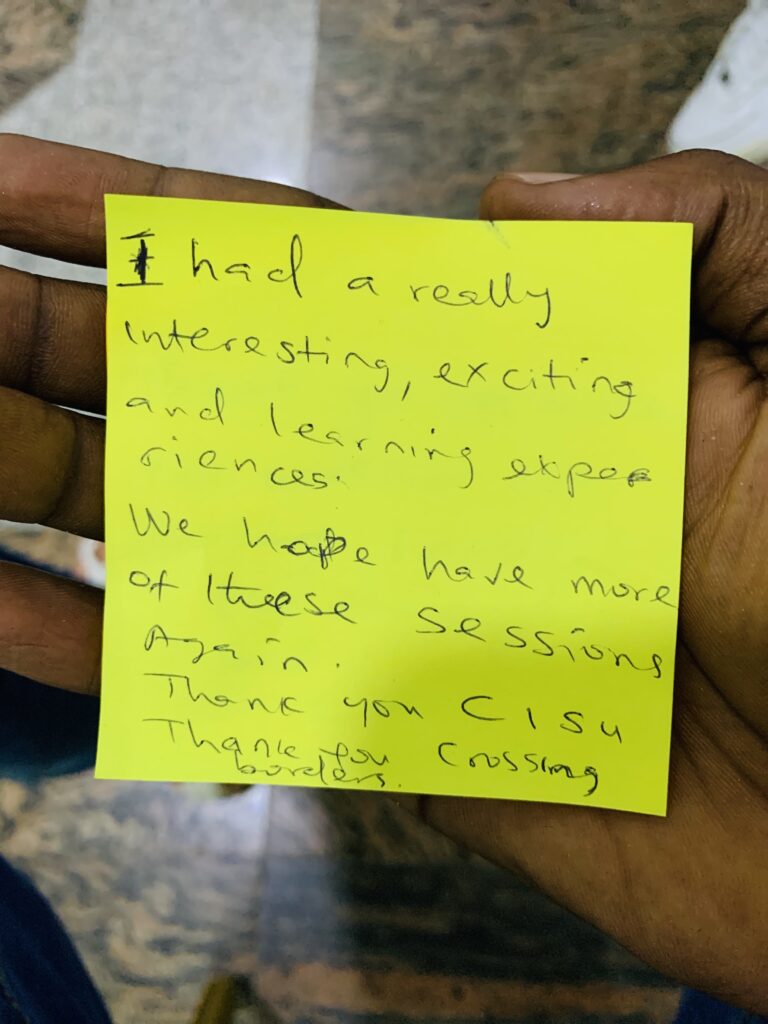
Educator's feedback: "I had a really interesting and exciting learning experience."
33 participants were trained over four days, including 20 public school teachers and 13 Teach the Child team members
92.9% of participants rated the workshop content, venue, and duration as excellent
100% rated facilitators as excellent
Educators reported significant improvement in:
Early Grade Reading techniques
Inclusive and 21st-century teaching methods
Classroom engagement and moderation
Child safeguarding awareness
By strengthening the capacity of these 20 educators, we are impacting hundreds of students who pass through their classrooms every year.
Lessons Learned
Teachers are eager for practical, context-specific solutions, not abstract theory.
A recurring message from participants we heard was: “More teachers in public schools need this training.”